
Welcome to the Office of the Chief of Chaplains (OCCH)
The Office of the Chief of Chaplains was established on July 15, 1920 through the National Defense Act of 1920. This represented a significant point of increased professionalization for the Chaplain Corps. For the first time, Regular Army, Army National Guard and Army Reserve religious support duties and functions became standardized and synchronized. This contributed to overall Army readiness by improving the provisions for the free exercise of religion, and for religious support leadership that enhanced morals and morale across the Army. The establishment of OCCH unified Army Chaplains in their calling as certified religious support professionals serving in the United States Army.
OCCH Front Office
(Pentagon)
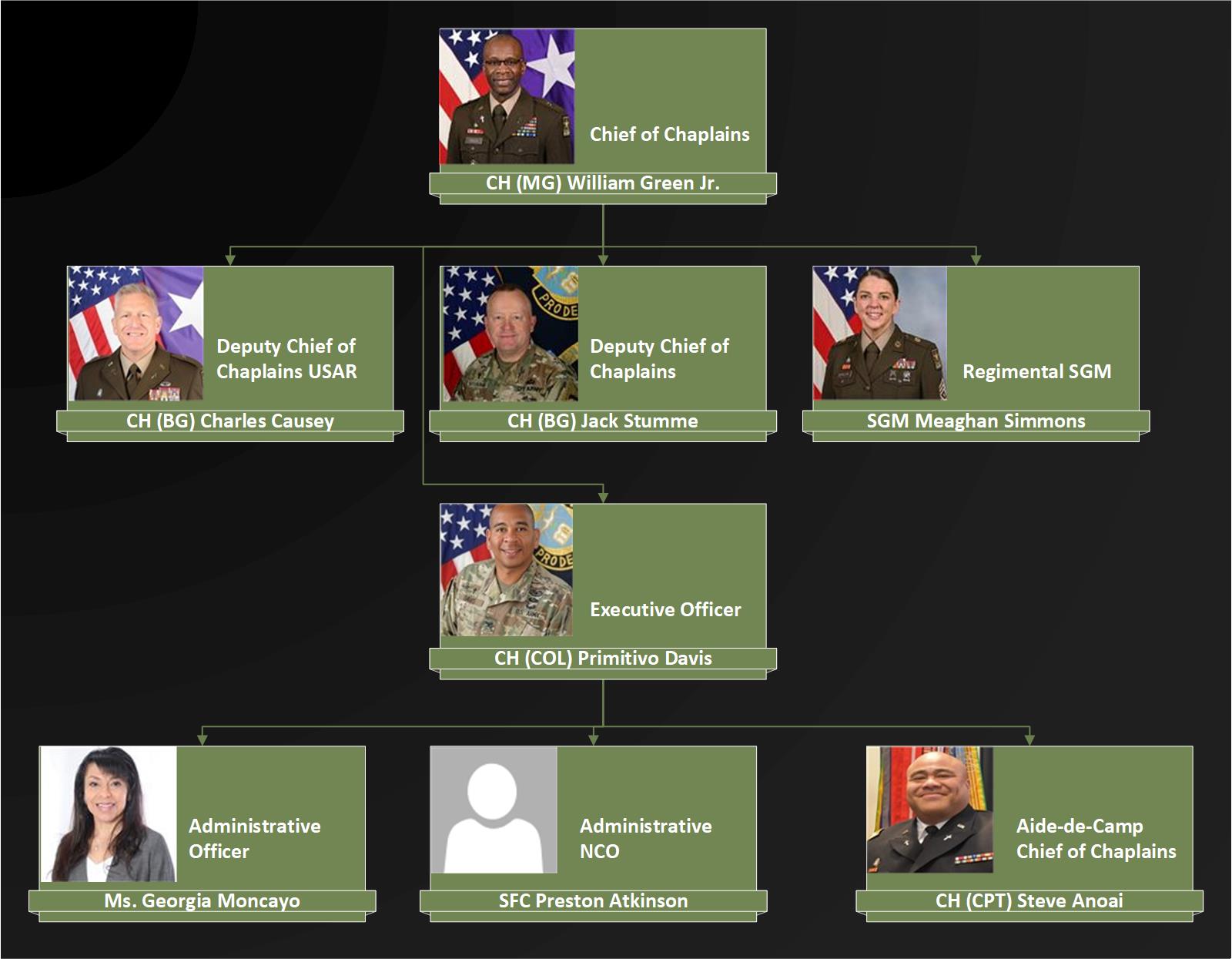
The Chief of Chaplains is the principal military advisor to the Secretary of the Army and the Chief of Staff of the Army on chaplaincy matters, assists the Assistant Secretary of the Army (ASA) (Manpower & Reserve Affairs) (M&RA) in developing and overseeing policies and programs that affect religious support or have a nexus with the chaplaincy, and plans and supervises the execution of those policies and programs.
The Chief of Chaplains is responsible for:
- Assisting the ASA (M&RA) in developing and overseeing policies and programs for the Chaplain Branch, including training, managing force structure and force integration, chaplaincy resources, budget, missions, information technology, and planning and supervising the execution of those policies and programs.
- Directing, in coordination with the ASA (M&RA), the recruitment, accession, and assignment of Army chaplains, including managing marketing and communication strategy.
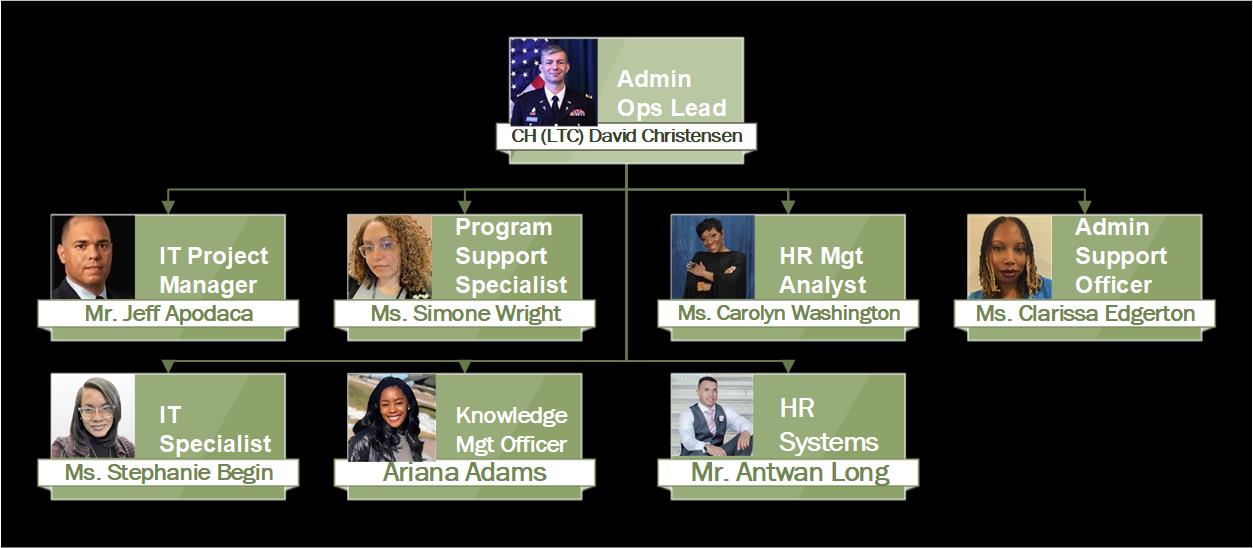
Admin Ops Section
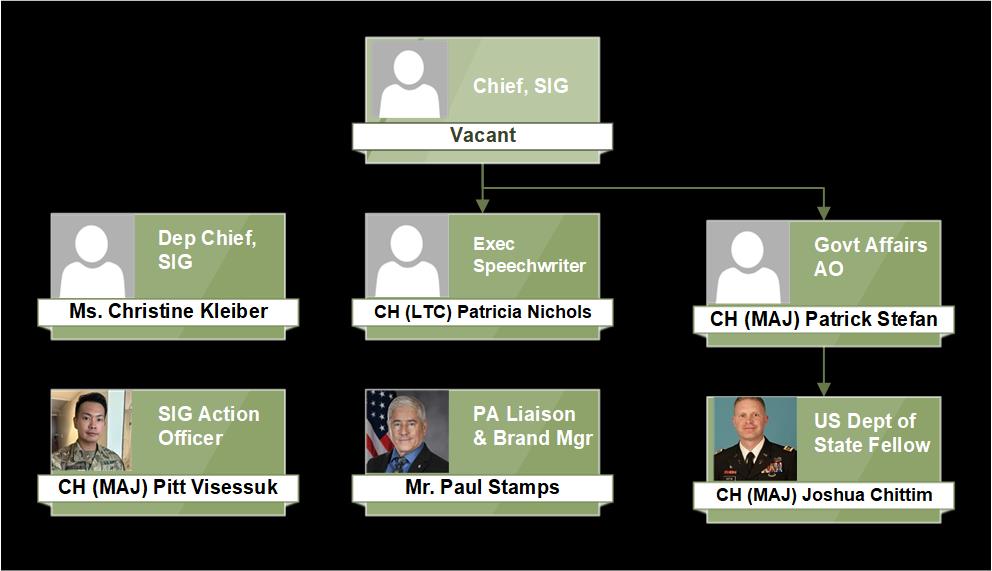
Strategic Initiatives Group
Strategy, Proponency, and Resources Directorate
(Pentagon)
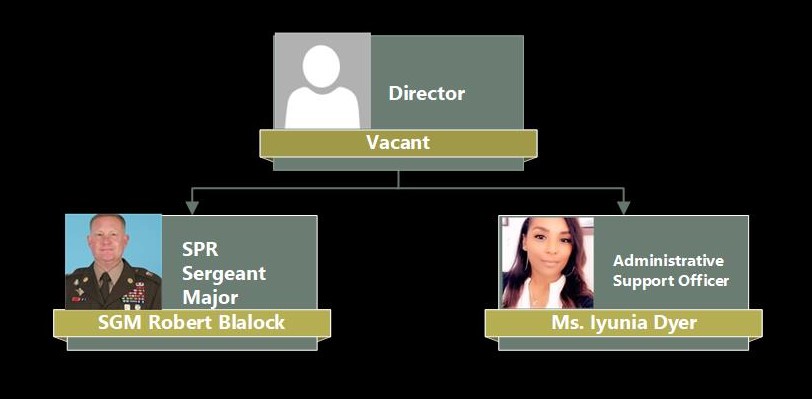
The Strategy, Proponency, and Resources (SPR) Directorate (SPR) aligns OCCH with Secretary of the Army objectives and Headquarters, Department of the Army bureaucratic functions, while also establishing greater unit of effort under the leadership of the Chief of Chaplains. SPR is focused on Chaplain Corps readiness to meet the challenges of multidomain operations and large-scale combat operations in 2030 and beyond, as the Corps continues to deliver religious support and build Army spiritual readiness.
The mission of the SPR Directorate is to shape the strategic environment through the development and staffing of the Chief of Chaplains (CCH) mission and vision and provide oversight for operationalizing the CCH's strategic objectives by directing SPR staff and functions, guiding the strategic direction of SPR, overseeing the actions of the Religious Support Operations Center (RSOC) and ensuring effective coordination and relationships across the Chaplain Corps. The SPR Directorate's major functions include:
- Direct and coordinate SPR elements across strategic plans and communications, policy development, resource planning and acquisition functional activities.
- Ensure effective coordination and relationships with the OCCH Front Office, USA-IRL, RSOC, HQDA counterparts, and intergovernmental agencies, non-government organizations, and other external stakeholders.
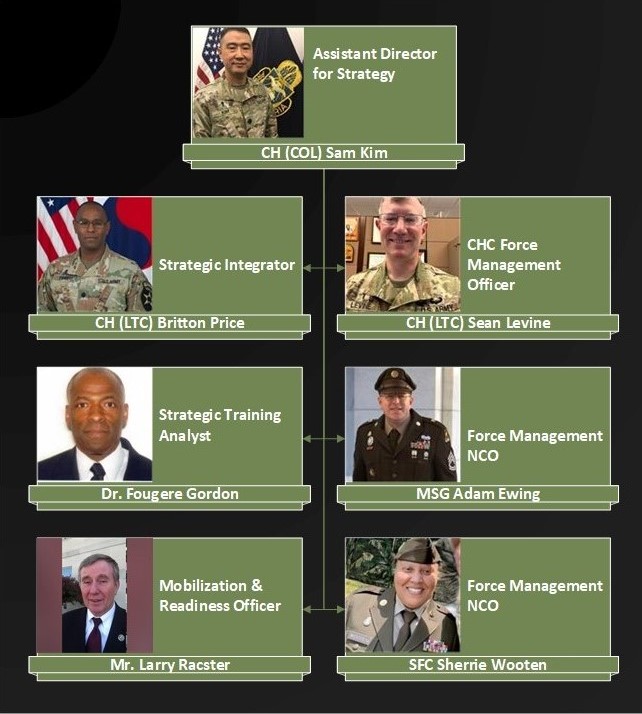
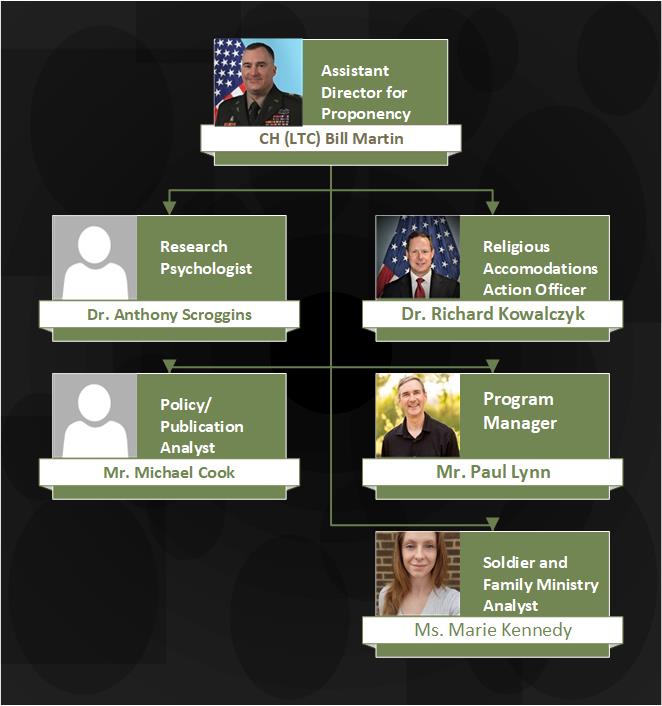
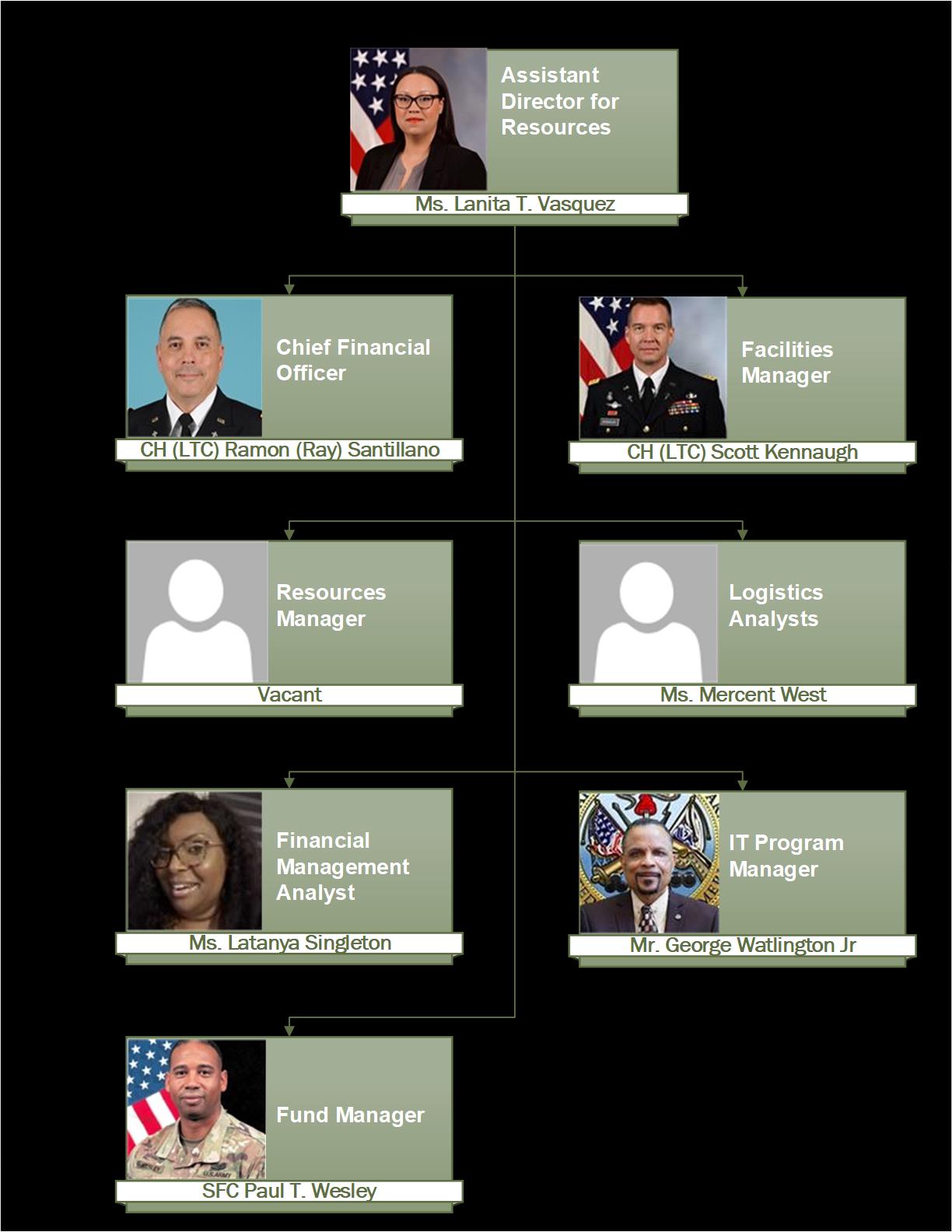
SPR consists of three (3) Assistant Directorates: Strategy, Proponency, and Resources.
Assistant Directorate for Strategy
Assistant Directorate for Proponency
Assistant Directorate for Resources
US Army Institute for Religious Leadership (USA-IRL) / Religious Support Operations Center (RSOC)
(Fort Jackson)
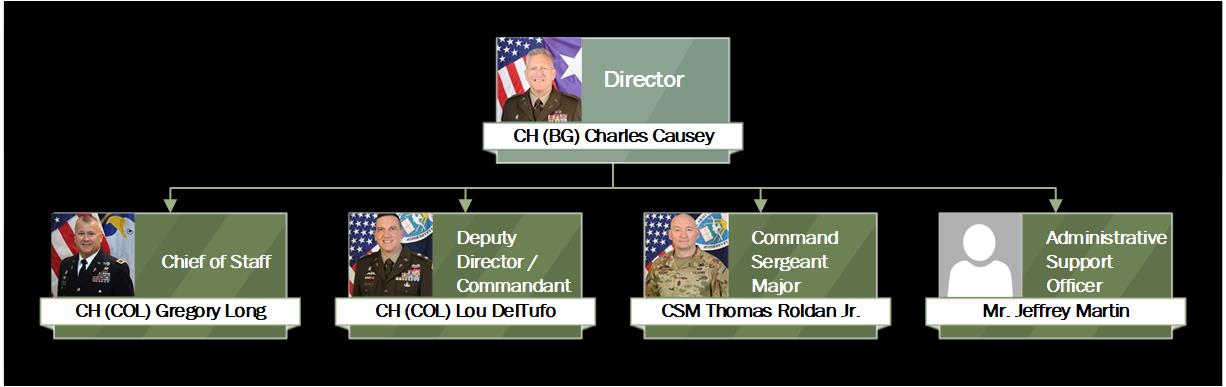
The U.S. Army Institute for Religious Leadership (USA-IRL), Fort Jackson, South Carolina is the “Heart and home” of the U.S. Army Chaplain Corps. Our mission is to generate and develop Area of Concentration (AOC)/Career Management Field (CMF) 56 Soldiers and capabilities to provide religious support and advisement across the full range of military operations to the total force.
Established in September 2020, the RSOC operationalizes the strategic direction for religious support delivery to the Army at the ground level; it's mission is to coordinate the management and execution of the Chaplain Corps operational support requirements, meeting Chaplain Corps personnel management needs, and actively engaging with the field.
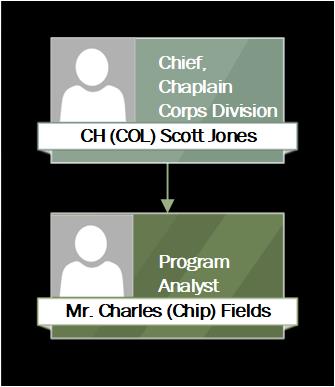
Chaplain Corps
Division
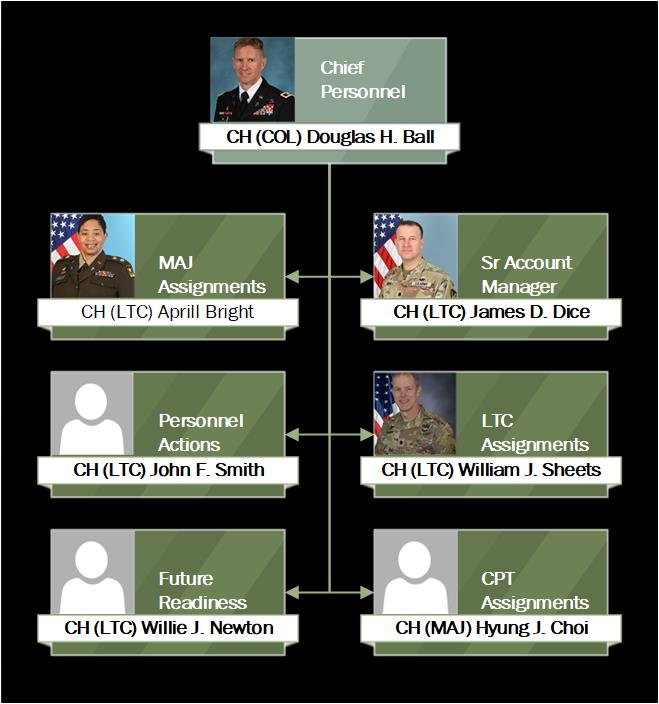
Personnel
Division
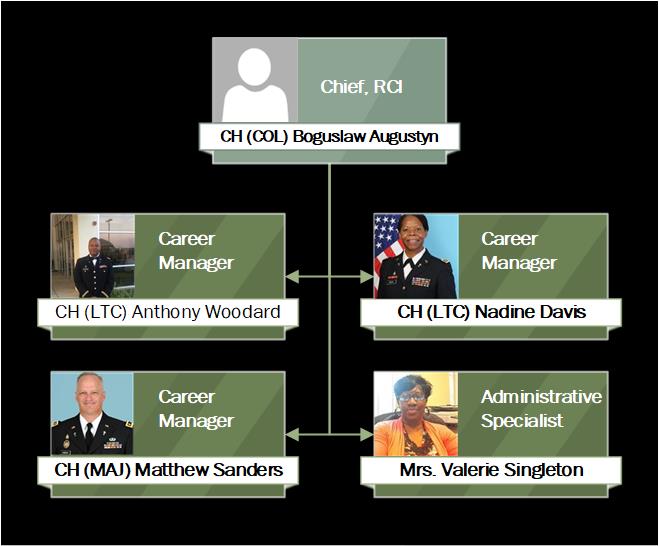
Reserve Components Integration
Recruiting and Accessions
Division
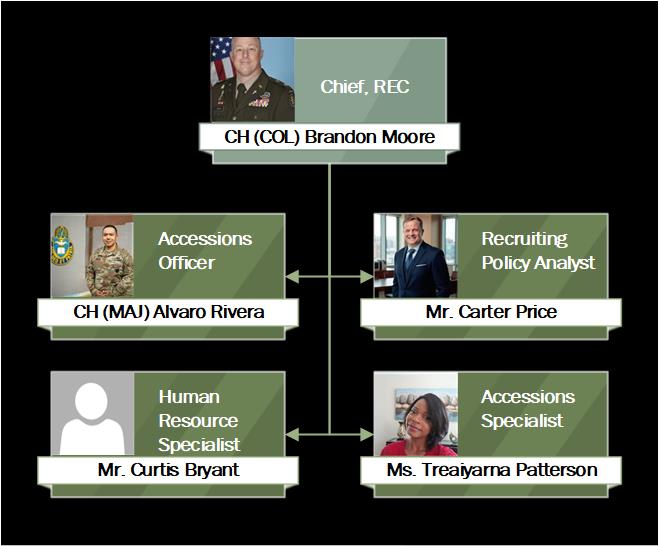
Religious Support
Division
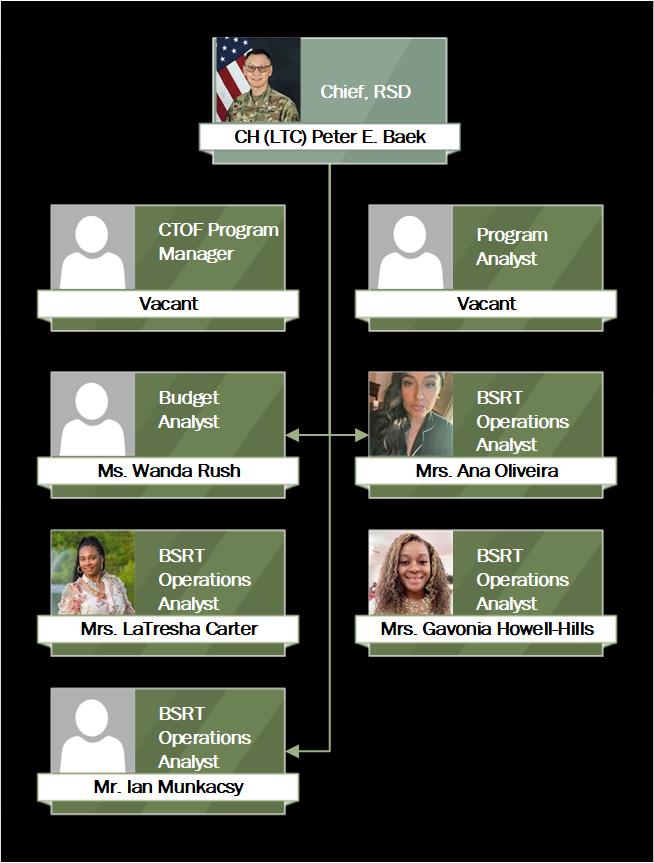
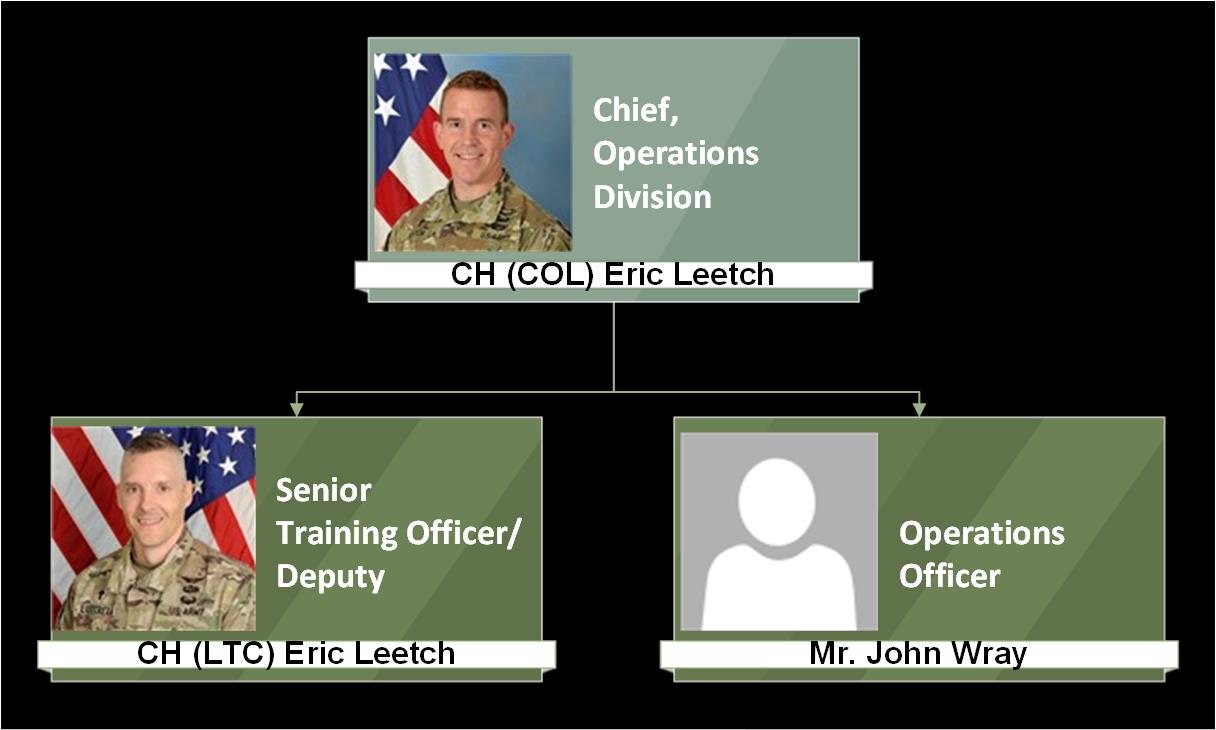
Operations
Division